

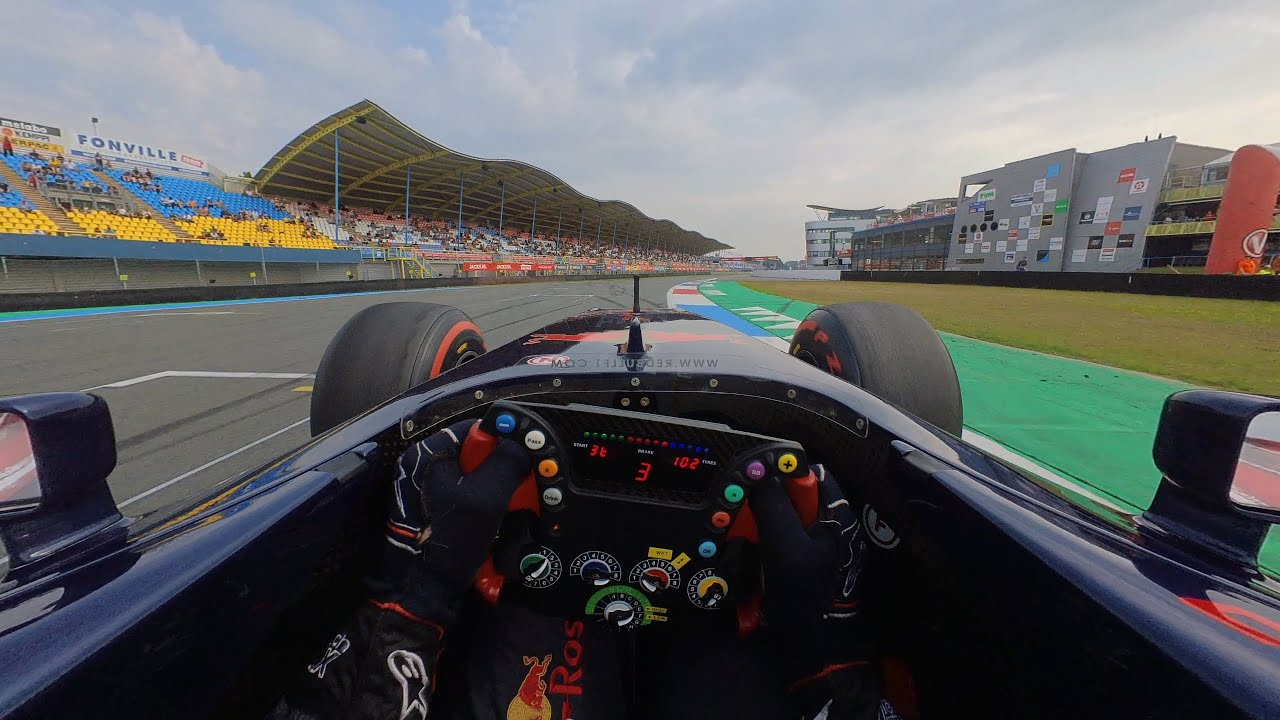
To most fans, a racing circuit looks like a simple path around a track. Drivers appear to follow the same corners, accelerate on the same straights, and repeat the same laps. But behind the helmet visor, professional racers see an entirely different world.
Every corner contains information. Every change in surface, every tire mark, and every shift in grip can influence performance. Elite drivers do not simply drive around a circuit — they constantly analyze it.
The ability to read a track is one of the biggest differences between experienced professionals and newcomers. It allows drivers to find speed, adapt to changing conditions, and make decisions that are invisible to spectators watching from the outside.
The Track Is a Constant Source of Information
A professional driver approaches a circuit like a constantly changing puzzle. The track is not just asphalt; it is a collection of signals that provide information about how the car should be driven.
Drivers analyze:
- Braking zones
- Corner entry points
- Racing lines
- Grip levels
- Surface changes
- Tire behavior
- Weather effects
While fans may focus on speed and overtakes, drivers are processing hundreds of details every lap.
Understanding Braking Points: Where Precision Begins
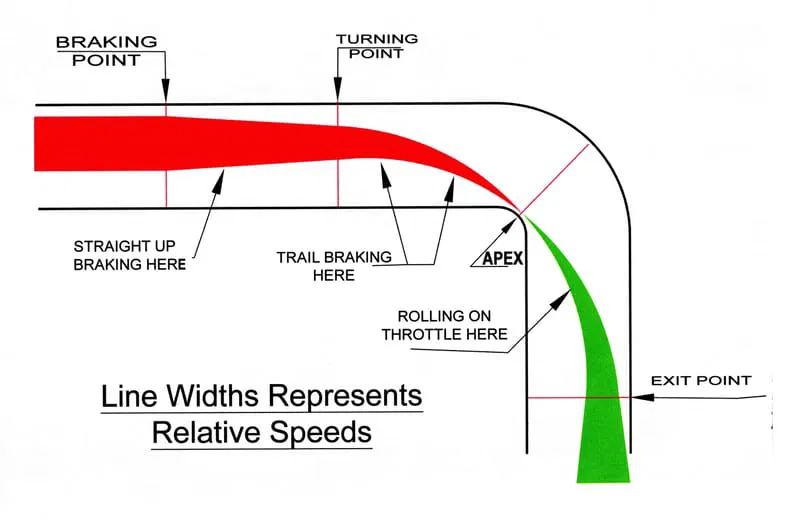
One of the most important skills in racing is finding the perfect braking point.
A braking point is the exact moment when a driver transitions from full acceleration to braking before entering a corner.
Braking too early costs time. Braking too late can cause:
- A missed corner
- Tire damage
- Loss of control
- A poor exit
Professional drivers constantly adjust braking points depending on conditions.
Why Braking Points Change
A braking point is never permanent. It can move because of:
- Tire wear
- Fuel load changes
- Track temperature
- Weather conditions
- Car setup changes
- Traffic
A driver who used the same braking marker every lap without adaptation would quickly lose performance.
Using Track Markers
Drivers use visual references around the circuit to judge braking zones.
These may include:
- Distance boards
- Curbs
- Barriers
- Trackside objects
- Changes in asphalt color
Over time, these references become automatic. A professional driver develops a mental map of the circuit that allows decisions to happen almost instantly.
The Racing Line: Finding the Fastest Path
The racing line is the ideal route around a corner that allows a driver to maintain maximum speed.
It usually involves three key points:
- Corner entry
- Apex
- Corner exit
The goal is to create the best balance between speed and control.
The Importance of the Apex
The apex is the point where the car gets closest to the inside of a corner.
Finding the correct apex allows drivers to:
- Carry more speed
- Accelerate earlier
- Improve exit performance
However, the fastest apex is not always the traditional one.
Drivers may choose different lines depending on the situation.
For example:
- A defensive line may protect against an opponent
- A wider entry may create a better exit
- A different apex may help preserve tires
Experienced drivers understand that the racing line is a tool, not a fixed rule.
Grip: The Invisible Advantage
Grip is one of the most important things a driver feels but fans cannot easily see.
Grip determines how much control a car has while accelerating, braking, and turning.
Drivers constantly evaluate:
- How much the tires are sliding
- How much steering input is needed
- How the car reacts under braking
- Whether conditions are improving or getting worse
How Track Conditions Affect Grip
A circuit’s grip level can change throughout a race.
Factors include:
Temperature
Hot conditions can affect tire performance and reduce available grip.
Rubber Build-Up
As more cars complete laps, tire rubber can change the surface characteristics.
Weather
Rain, humidity, and wind can dramatically alter how a car behaves.
Track Usage
Some parts of a circuit may become faster as they are used, while others may become dirty or slippery.
Professional drivers adapt constantly.
Reading Tire Behavior
Tires are one of the most important sources of information for a driver.
A driver can feel changes in tire performance through:
- Steering feedback
- Acceleration response
- Braking stability
- Cornering ability
Understanding tires helps drivers decide when to push and when to protect performance.
Managing the Limit
A common mistake among inexperienced drivers is constantly driving at the absolute limit.
Professional racers understand that the fastest overall performance often comes from staying just below the point where mistakes happen.
They manage:
- Tire temperature
- Tire wear
- Sliding
- Mechanical stress
This allows them to maintain speed throughout an entire race.
Learning From Every Lap
Professional drivers do not treat practice laps as simple repetition. Every lap provides information.
After a session, drivers analyze:
- Which corners improved
- Where time was lost
- How the car changed
- How competitors performed
Modern racing combines driver feedback with data analysis to find small improvements.
Comparing Data
Teams use telemetry to compare laps and identify differences.
They can study:
- Braking pressure
- Throttle application
- Steering input
- Speed through corners
This helps drivers understand exactly where they can improve.
Seeing Beyond the Corner Ahead
Elite drivers think several steps ahead.
While approaching one corner, they are already considering:
- The next corner sequence
- Tire management
- Potential overtaking opportunities
- Competitor positions
This forward thinking is essential in racing because every decision affects future opportunities.
A driver who exits one corner better may create an advantage several corners later.
Weather and Changing Conditions
One of the greatest demonstrations of track reading comes when conditions change.
Rain, drying surfaces, and temperature shifts can completely transform a circuit.
Professional drivers look for:
- Wet and dry areas
- Tire marks showing grip levels
- Surface reflections
- Changing braking zones
They must quickly understand where the track offers the most grip.
Adapting Faster Than Competitors
When conditions change, the driver who adapts fastest often gains the biggest advantage.
This is why experienced racers can perform well even when conditions become unpredictable.
The Mental Map Inside a Driver’s Head
A professional driver carries an incredibly detailed mental model of the circuit.
They remember:
- Where the car feels strongest
- Where grip changes
- Which corners require patience
- Where opportunities exist
This knowledge allows them to make decisions without conscious hesitation.
Why Track Reading Creates Champions
The difference between a good driver and an elite driver is often not obvious from a single lap. It appears through consistency, adaptation, and decision-making over an entire race.
Professional drivers see details that spectators cannot easily notice. They read braking zones, understand grip changes, adjust racing lines, and constantly search for improvements.
The track may look the same to everyone watching, but inside the cockpit, every corner tells a story. The ability to understand that story is what allows the world’s best drivers to find performance where others cannot.